Mobile Home Levelling in Alberta: What Homeowners Need to Know
Introduction
If your mobile home feels uneven—floors sloping, doors sticking, or walls shifting—it’s likely time for levelling.
In Alberta, this is extremely common.
Most mobile homes are installed on blocking systems, and over time, those systems move due to soil conditions, moisture, and seasonal changes.
The good news?
Levelling is a normal part of maintaining a mobile home—and when done properly, it keeps your home safe, functional, and comfortable.
What Causes Mobile Homes to Shift?
Movement is expected—especially in Alberta.
Common causes:
- Freeze-thaw cycles
- Soil movement (especially clay)
- Moisture changes under the home
- Settlement of fill or organic soils
- Natural compression over time
Blocking systems sit within this active zone, which means adjustment is part of the lifecycle.
Signs Your Home Needs Levelling
Watch for:
- Doors and windows sticking
- Uneven or sloping floors
- Cracks in drywall or ceiling joints
- Gaps between walls and floors
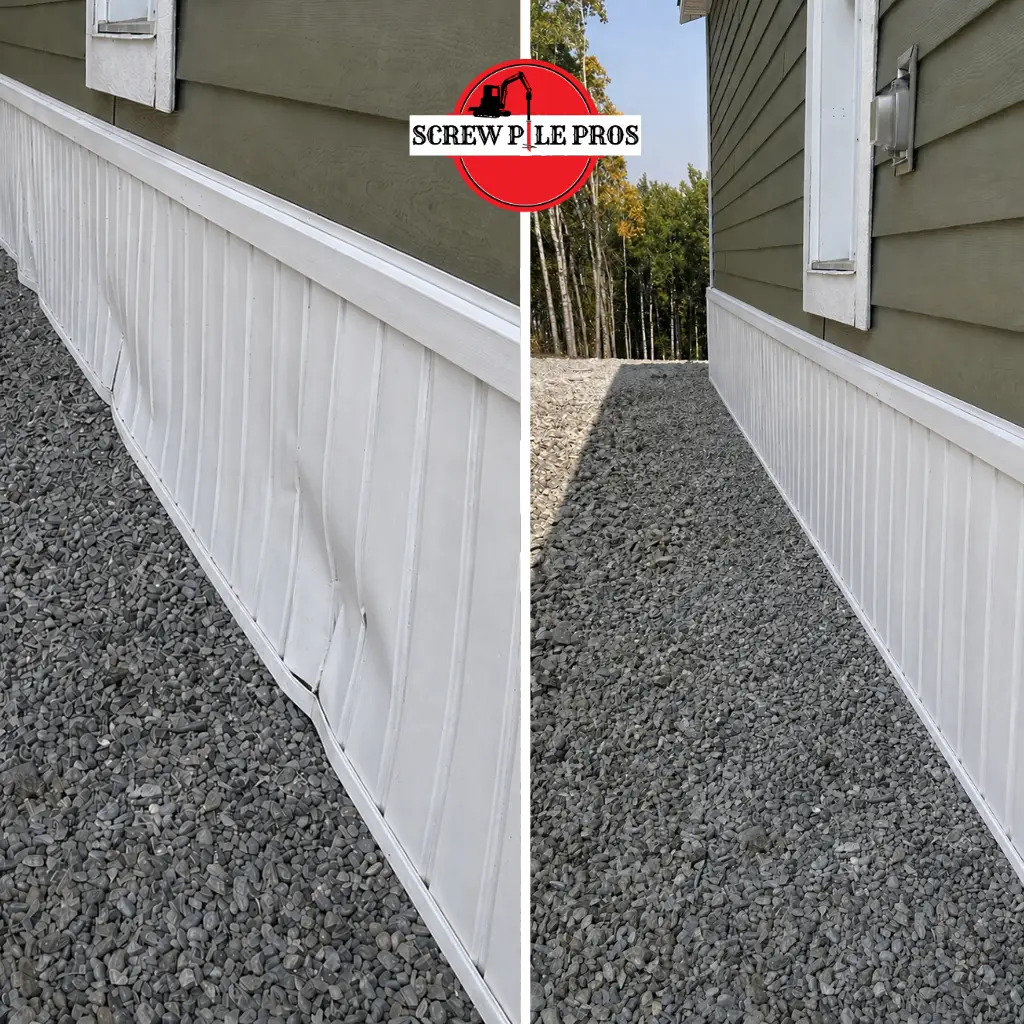
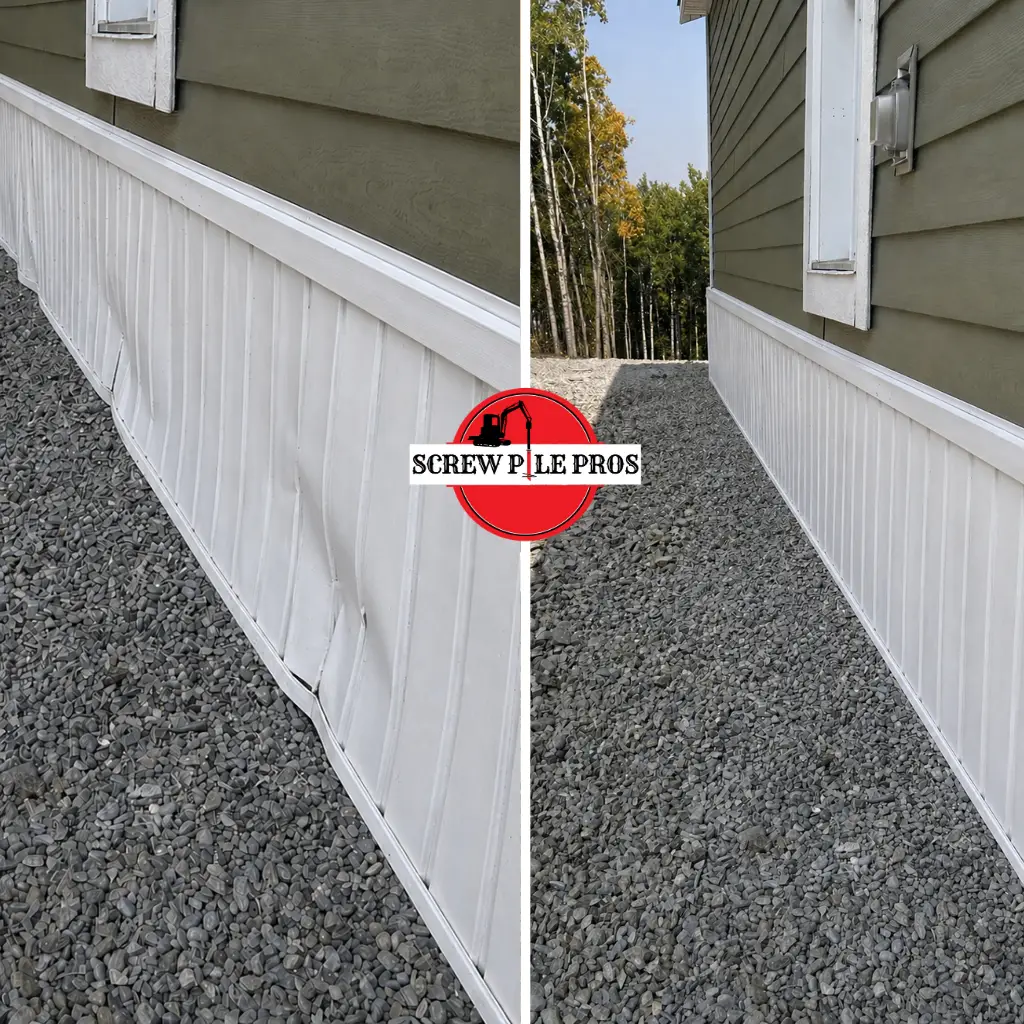
- Skirting shifting or separating
- Movement or creaking when walking
👉 Pro Tip: These issues usually develop gradually—don’t wait until they become severe.
How Mobile Home Levelling Works (Blocking Systems)
Levelling a mobile home typically involves adjusting the existing support system.
This may include:
- Re-aligning shifted blocking
- Adding new blocking where support is needed
- Replacing rotted or damaged wood supports
- Adjusting heights to bring the home back to level
👉 Real-world insight: Many homes require small adjustments every few years depending on soil conditions.
Why Alberta Soil Matters
Alberta creates one of the toughest environments for blocking systems.
Key factors:
- Frost depth reaching 6–8 feet
- Expansive clay soils that move with moisture
- Seasonal ground movement
Because blocking sits near the surface, it is directly affected by these conditions.
Common Mistakes Homeowners Make
Avoid these:
- Ignoring early warning signs
- Waiting too long between levelling adjustments
- Not addressing drainage issues
- Using improper materials for replacement blocking
- Attempting major levelling without professional help
What to Expect During Levelling
A typical levelling job may include:
- Inspection of current supports
- Identification of problem areas
- Adjustment of existing blocking
- Replacement of damaged components
- Final levelling and stability check
Most levelling jobs can be completed in a relatively short timeframe depending on conditions.
Why It Matters
A properly levelled home:
- Reduces structural stress
- Protects plumbing and electrical systems
- Improves comfort and usability
- Maintains property value
👉 Bottom line: Levelling isn’t optional—it’s part of maintaining a mobile home in Alberta.
Why Choose Screw Pile Pros
Even though many mobile homes are on blocking systems, working with experienced professionals matters.
Screw Pile Pros provides:
- Honest assessments of your current system
- Safe and precise levelling adjustments
- Experience working in Alberta soil conditions
- Practical solutions based on real-world performance
FAQ
How often should a mobile home be levelled?
Typically every few years, but it depends on soil conditions and movement.
Can I level my mobile home myself?
Minor adjustments may be possible, but professional levelling is recommended for safety and accuracy.
What causes blocking to fail?
Moisture, rot, soil movement, and time.
Is levelling expensive?
Costs vary depending on how much adjustment or replacement is required.
Conclusion
Mobile home levelling in Alberta is not a one-time fix—it’s an ongoing part of homeownership.
Understanding how blocking systems work—and staying ahead of maintenance—will keep your home safe, stable, and comfortable for years to come.
👉 Contact Screw Pile Pros today for a quote or consultation.